
Is Reroofing Over an Old Membrane Ever a Good Idea?
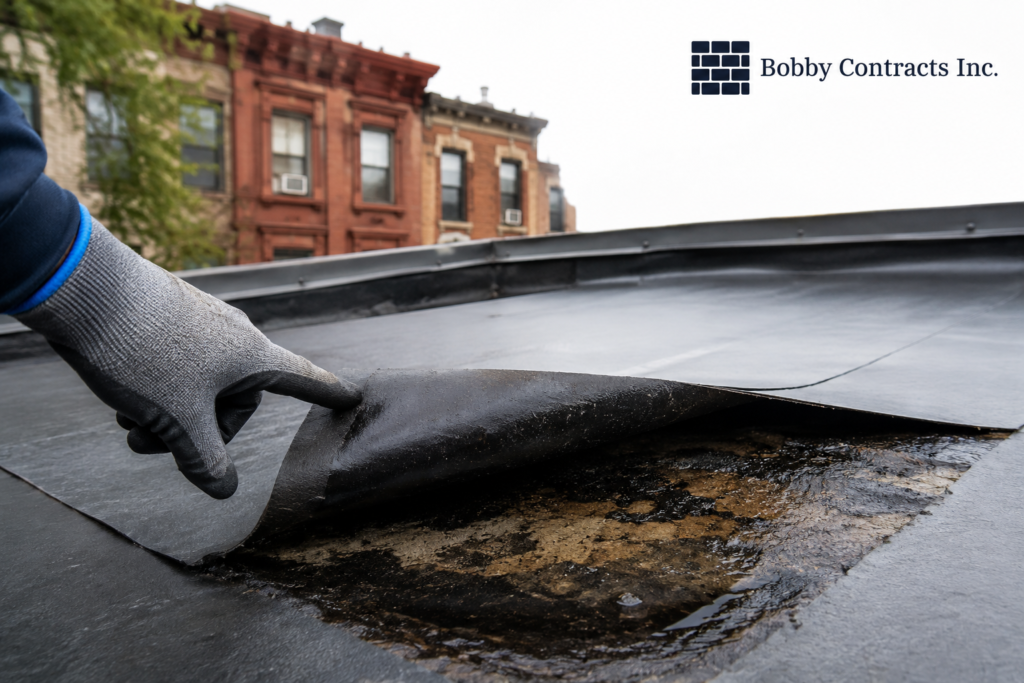
Reroofing over an old membrane can be a good idea only in specific cases — when the existing roof is dry, structurally sound, and has just one layer. Done on a wet, damaged, or multi-layered roof, it traps moisture between layers and leads to rot, mold, and premature failure. Most flat roofs in Brooklyn’s older buildings need a full tear-off instead.
This comes up constantly on flat roofs in Williamsburg, Park Slope, Clinton Hill, Brooklyn Heights, and Prospect Heights, where older brownstones and multi-family buildings often have one or more existing roofing layers already in place from past work.
What Does “Reroofing Over” Actually Mean?
Reroofing over an old membrane sometimes called a “recover” or “overlay” means installing a new roofing membrane directly on top of the existing one instead of removing it first. Contractors sometimes pitch this as a faster, cheaper alternative to a full tear-off, since it skips demolition and disposal costs.
On paper, it sounds efficient. In practice, it only works under narrow conditions, and getting it wrong is one of the most common ways Brooklyn homeowners end up with hidden leaks a few years down the line.
We’ve seen this come up on Reddit too on subreddits like r/roofing and r/HomeImprovement, homeowners often ask whether a contractor’s suggestion to “just roof over” the old layer is a red flag, and roofers weighing in frequently warn about trapped moisture turning into a much bigger problem down the line. One recurring theme in those threads: homeowners who agreed to a recovery to save money end up paying more later once hidden rot or mold is discovered, exactly the “nightmare territory” scenario worth avoiding upfront.
When Reroofing Over an Old Membrane Can Work
A recovery job can be a reasonable option when:
- The existing roof has only one layer. NYC building code and most manufacturer warranties won’t allow recovering over two or more existing layers.
- The deck and insulation are completely dry. Any trapped moisture at install time will stay trapped — there’s nowhere for it to go once it’s sealed under a new membrane.
- There’s no visible sagging, soft spots, or structural damage. A recover doesn’t fix underlying deck problems; it just covers them.
- The existing membrane is in reasonably good condition. Cracked, blistered, or heavily patched membranes shouldn’t be built over.
Even when these conditions are met, a roof consultant or experienced roofer should do a proper inspection first — not just a walk-through, but actual moisture testing where possible.
When Reroofing Over an Old Membrane Turns Into a Problem
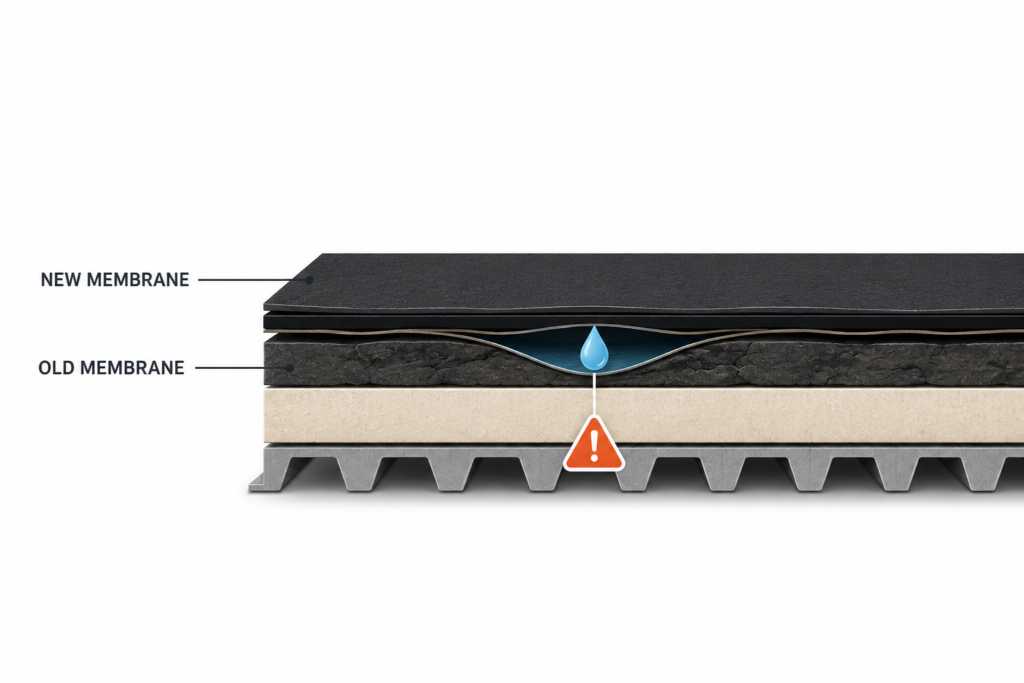
This is where most of the horror stories come from. Building over a roof that has existing moisture, multiple layers, or damage effectively seals the problem inside the roof assembly.
Common issues that develop:
- Trapped moisture with nowhere to evaporate, leading to wood rot in the deck and insulation breakdown over time
- Mold growth between the layers, which isn’t visible until there’s a leak or a much larger repair is needed
- Reduced roof lifespan — a recovery over a compromised roof often fails years earlier than a proper tear-off would
- Voided warranties, since most manufacturers require a fully dry, code-compliant substrate for coverage
Brooklyn’s older multi-family buildings and brownstones are especially prone to this. Many have already been recovered once or twice by previous owners or contractors trying to save money, which means a new “quick” overlay is often built on top of an already-compromised system.
If you own a multi-family building or brownstone in Brooklyn Heights or Prospect Heights and aren’t sure how many layers are already on your roof, that’s exactly the kind of question worth answering before signing off on a recovery.
How to Tell If Your Roof Is a Candidate for Recovering vs. Full Replacement
Ask your roofer these questions before agreeing to a recovery job:
- How many existing layers are on the roof right now? If it’s already been recovered once, a second recovery is usually not code-compliant or advisable.
- Has the roof been tested for trapped moisture? A roofer or consultant should check this — visually assessing dryness isn’t enough.
- What does the warranty cover if it’s a recovery vs. a tear-off? Many manufacturers offer shorter or no warranty on recovery jobs.
- What’s under the current membrane? If the insulation or deck is compromised, a recovery just hides the problem rather than solving it.
If the answers raise any doubts, a full tear-off — while more expensive upfront — is almost always the safer long-term investment, since it lets the roofer inspect and repair the deck and insulation directly rather than guessing what’s underneath.
The Bottom Line
Reroofing over an old membrane isn’t a shortcut that’s always cheaper — it’s a narrow option that only makes sense on a dry, single-layer, structurally sound roof. On anything else, it’s a way of sealing a future leak behind a brand-new-looking surface. A qualified roofer who physically inspects the existing roof — not just quotes from photos — is the best way to find out which category your roof falls into.
Whether you’re in Williamsburg, Park Slope, Clinton Hill, Brooklyn Heights, or Prospect Heights, if you’re unsure whether your roof is a candidate for a recovery or needs a full replacement, our Brooklyn roofing contractors team can inspect it in person and give you a straight answer before any work begins. Reach out today to schedule an on-roof assessment.
FAQ
Is it cheaper to reroof an old membrane than to tear it off?
Yes, upfront — recovering skips demolition and disposal costs. But if moisture gets trapped or the roof needs repair sooner than expected, the long-term cost is often higher than a proper tear-off would have been.
How many layers of roofing can be on a flat roof before a tear-off is required?
Most codes and manufacturer warranties allow only one existing layer before a recovery. Two or more layers typically require a full tear-off.
Can trapped moisture under a recovered roof cause mold?
Yes. Moisture sealed between roofing layers has no way to evaporate and can lead to mold growth and deck rot, often undetected until a leak appears..
How do I know if my roof already has multiple layers?
A roofer or roof consultant can determine this during an on-site inspection, sometimes by cutting a small test section or checking prior permit history for the building.