
Brownstone Restoration vs. Facade Restoration: What’s the Difference?
Brownstone restoration focuses on repairing and preserving brownstone surfaces, stoops, and architectural details, while facade restoration covers a building’s exterior more broadly, including brickwork, mortar joints, stucco, lintels, parapets, and exterior sealants. In Brooklyn, the two services can overlap, especially when an older brownstone has deteriorating masonry, water intrusion, or damaged decorative features. The right approach depends on the building materials, the extent of the damage, and the repairs required.
What Is Brownstone Restoration?
Brownstone restoration involves repairing and preserving the exterior features of brownstone buildings while maintaining their original architectural character. Many historic Brooklyn properties feature brownstone facades, stoops, decorative stonework, and other details that can deteriorate over time due to weather exposure, moisture, aging materials, and previous repairs.
Professional brownstone restoration in Brooklyn may include repairing cracked or chipped brownstone surfaces, restoring deteriorated facade sections, repairing stoops and steps, addressing damaged cornices or parapets, and correcting moisture-related deterioration.
The objective is not simply to improve the building’s appearance. Proper restoration also addresses the condition of the affected materials and helps protect the exterior from further deterioration.
Common Brownstone Restoration Services
Depending on the property’s condition, brownstone restoration may include:
- Brownstone facade repair: Repairing cracked, chipped, or weathered brownstone surfaces.
- Brownstone stoop restoration: Repairing deteriorated steps, landings, and related entry features.
- Architectural detail restoration: Addressing damaged decorative features and exterior elements.
- Masonry repair: Repairing deteriorated mortar joints and damaged brickwork where present.
- Waterproofing: Addressing suitable exterior surfaces and joints where water penetration contributes to deterioration.
- Cornice and parapet repair: Repairing damaged exterior architectural components as required.
Because older brownstones can contain different materials and previous repair treatments, the repair method should be selected after assessing the existing surface. Inappropriate materials or incompatible repair methods may affect the appearance and durability of the restored area.
For property owners who need specialized assistance, Bobby Contracts Inc. provides brownstone restoration services in Brooklyn, NY.
What Is Facade Restoration?
Facade restoration is the repair and rehabilitation of a building’s exterior walls and related components. Unlike brownstone restoration, which focuses on brownstone properties and their distinctive features, facade restoration can apply to brick buildings, stucco exteriors, apartment buildings, mixed-use properties, commercial buildings, and brownstones.
Facade deterioration can occur when mortar joints weaken, bricks crack, steel lintels corrode, sealants fail, or parapet walls become damaged. Water penetration and repeated exposure to changing weather conditions can contribute to these problems.
Facade restoration contractors in Brooklyn inspect the visible exterior damage and assess which components require repair. The scope of work may involve localized repairs or a broader restoration project, depending on the building’s condition.
Common Facade Restoration Services
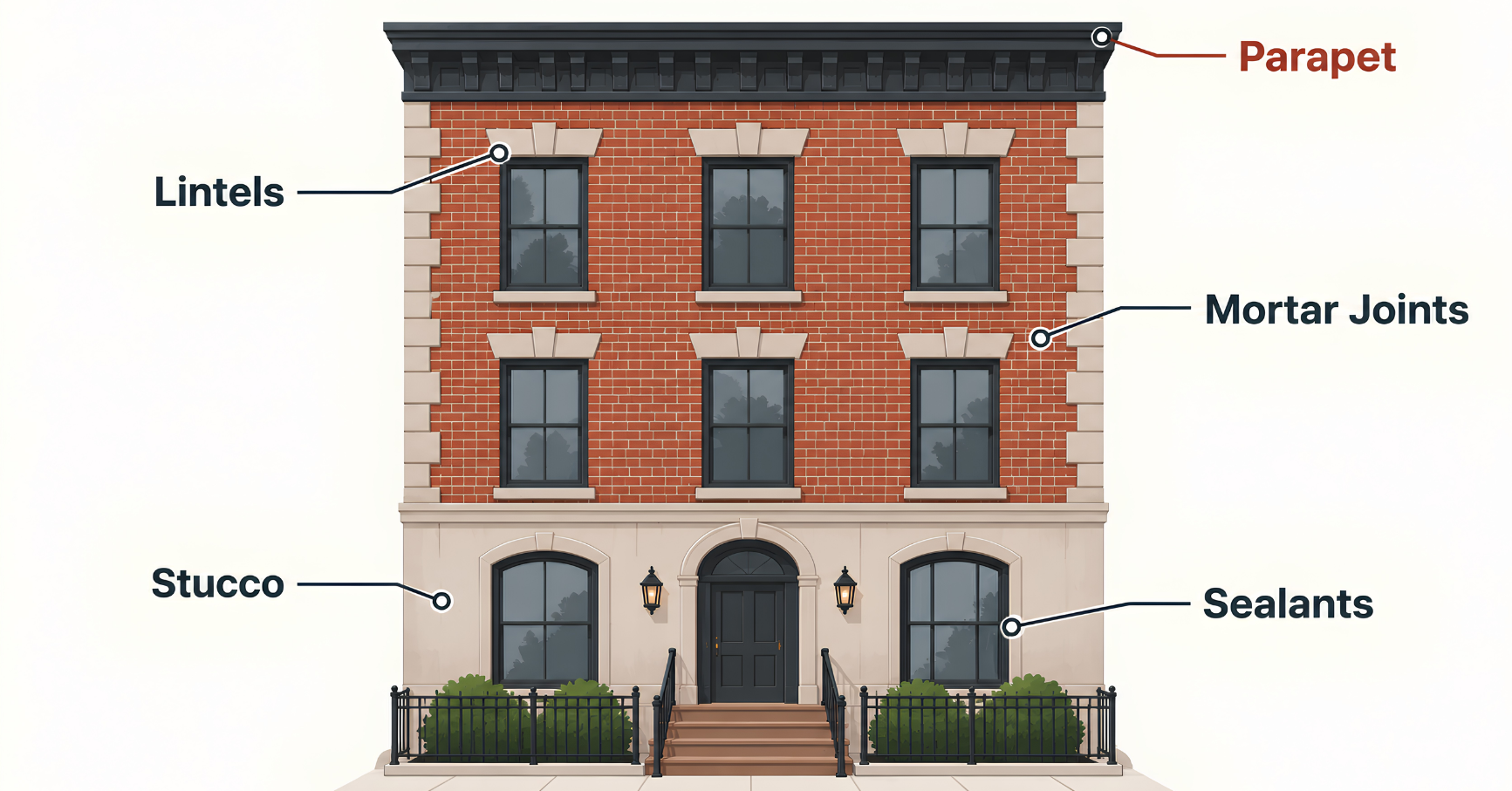
Facade restoration may include:
- Brick facade repair: Repairing damaged bricks and deteriorated sections of exterior masonry.
- Masonry repointing: Removing deteriorated mortar where appropriate and installing compatible replacement mortar.
- Stucco repair: Repairing cracked, chipped, or damaged stucco surfaces.
- Lintel repair or replacement: Addressing deteriorated lintels above windows and other openings.
- Parapet wall repair: Repairing damaged masonry, coping, and related exterior components.
- Exterior sealant replacement: Replacing failed sealants around suitable joints and transitions.
- Exterior waterproofing: Addressing identified water entry points and protecting appropriate exterior surfaces.
Facade restoration is especially important when deterioration extends beyond one small area. For example, cracked brickwork around several windows, failing mortar joints, and damaged parapet masonry may require a coordinated repair plan rather than isolated cosmetic fixes.
Bobby Contracts Inc. offers facade restoration services in Brooklyn, NY for residential and commercial properties.
Brownstone Restoration vs. Facade Restoration: Key Differences
Although these services overlap, their primary focus and typical scope of work differ.
1. Building Materials
Brownstone restoration primarily addresses brownstone surfaces and the distinctive architectural features associated with brownstone properties. Depending on the building, related work may also involve brick masonry, stoops, cornices, and parapets.
Facade restoration covers a wider range of exterior materials, including brick, mortar, stucco, stone, lintels, coping, and sealants.
2. Scope of Work
Brownstone restoration often concentrates on preserving the appearance and condition of a specific type of property and its architectural details.
Facade restoration may cover a larger portion of a building’s exterior wall system. This could involve repairing damaged brickwork, replacing deteriorated mortar, addressing lintel problems, repairing parapets, and correcting failed sealant joints.
3. Architectural Preservation
Preserving the original character of a historic brownstone is often a central consideration during brownstone restoration. Repair materials and techniques should be selected with the existing surface and architectural details in mind.
Facade restoration also considers appearance, but its scope may focus more broadly on exterior performance, masonry condition, weather resistance, and the repair of multiple building components.
4. Types of Properties
Brownstone restoration is particularly relevant to traditional brownstone homes and similar historic properties found in Brooklyn neighborhoods such as Park Slope, Brooklyn Heights, Cobble Hill, and Carroll Gardens.
Facade restoration applies to a wider range of properties, including brownstones, brick apartment buildings, multi-family buildings, mixed-use properties, and commercial structures.
5. When Each Service Is Needed
Brownstone restoration may be appropriate when the primary issues involve damaged brownstone surfaces, deteriorated stoops, or architectural features that need careful repair.
Facade restoration may be more suitable when damage affects brickwork, mortar joints, stucco, lintels, parapets, or multiple exterior wall components.
A brownstone property can require both services if its distinctive brownstone surfaces and other facade components have deteriorated.
Can a Brooklyn Brownstone Need Both Types of Restoration?
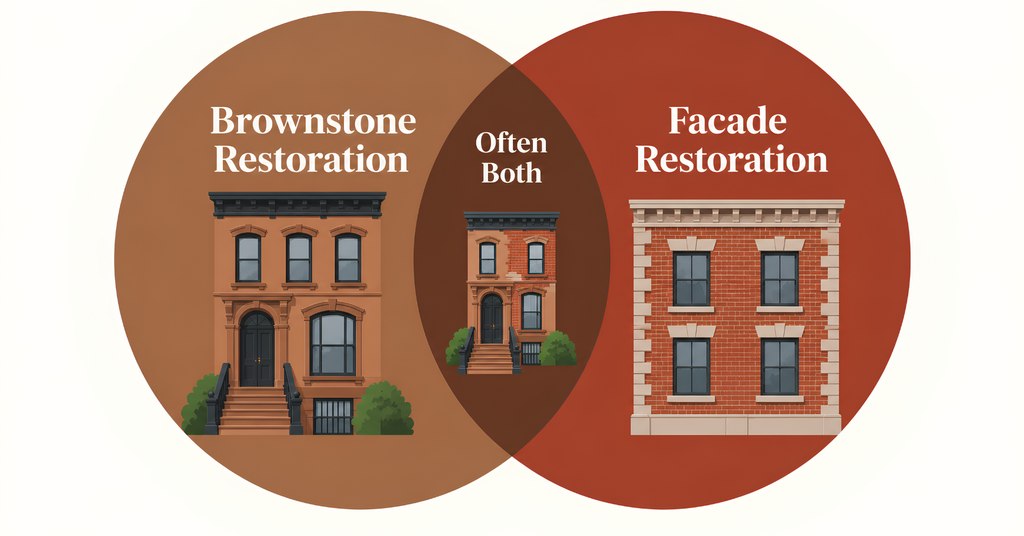
Yes. A brownstone is a type of building, while facade restoration describes a broader category of exterior repair work. This means the two services are not mutually exclusive.
For example, a brownstone property might have chipped brownstone surfaces around its entrance, deteriorated mortar joints along brick side walls, and damaged sealants around windows. Repairing only the brownstone surface would not necessarily address the separate masonry and sealant problems.
In this situation, a contractor can assess the different materials and prepare a coordinated restoration plan. The work may include brownstone surface repairs, compatible mortar repairs, replacement of failed sealants, and repairs to other damaged exterior components.
The important step is to identify the source and extent of each problem before deciding on the repair method.
Common Signs Your Brownstone or Building Facade Needs Repair
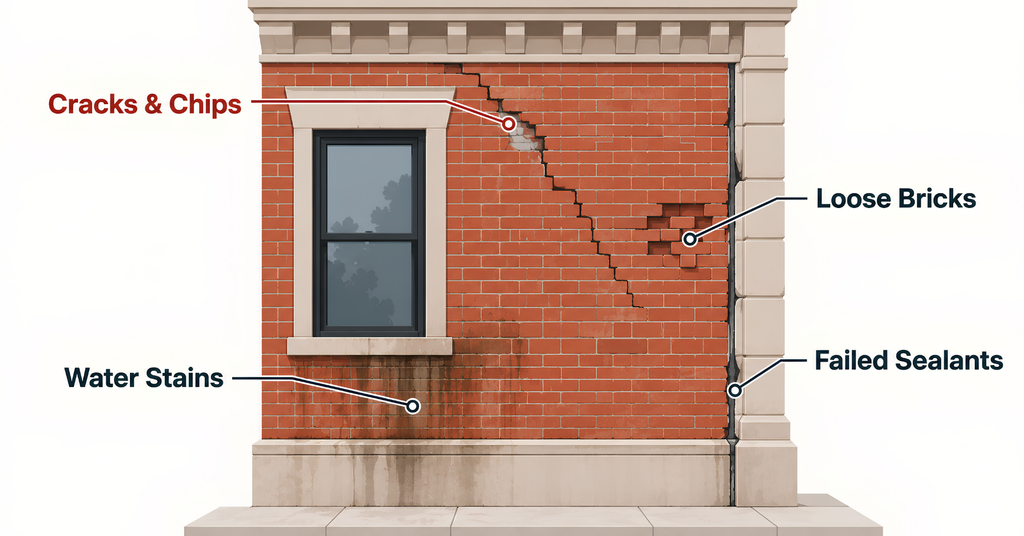
Whether you own a brownstone or another type of Brooklyn property, certain warning signs may indicate that the exterior needs professional assessment.
Look for:
- Cracks, chips, or sections breaking away from brownstone surfaces.
- Deteriorating mortar joints or loose bricks.
- Water stains or recurring moisture around exterior walls and windows.
- Damaged or deteriorating stoops and steps.
- Cracked stucco or visibly damaged facade sections.
- Rust staining or cracking around window lintels.
- Deteriorating parapet walls, coping, or cornices.
- Failed exterior sealants or visible gaps around joints.
These signs do not all indicate the same underlying problem. Some may require localized material repairs, while others may warrant further investigation into moisture entry or structural deterioration.
Loose masonry, falling material, bulging walls, or significant cracks should be assessed promptly by a qualified professional. Where structural stability is in question, an appropriately licensed engineer or other qualified specialist may be needed.
How Does the Restoration Process Work?
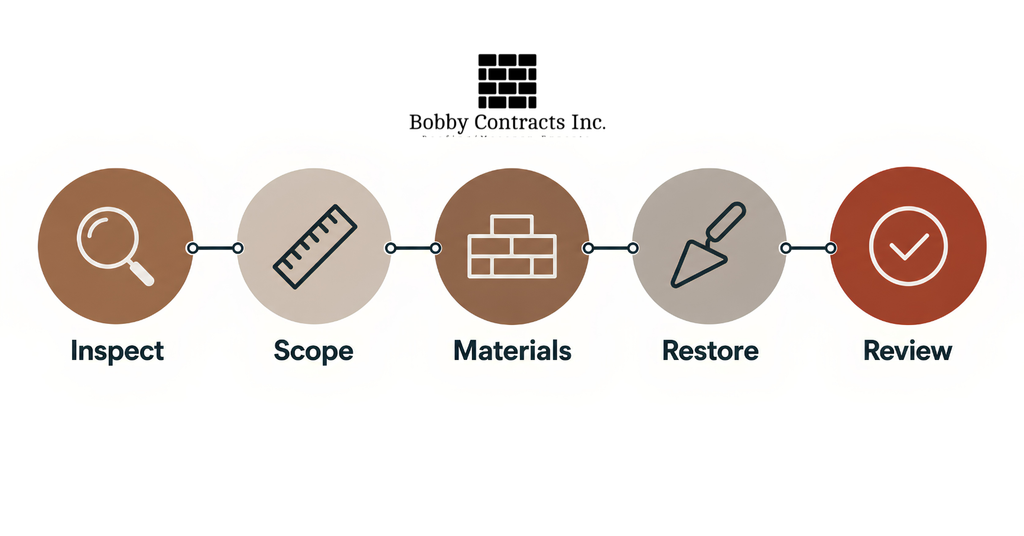
The appropriate process depends on the building and the extent of deterioration. A typical project involves several stages.
1. Exterior Inspection
The contractor examines the affected brownstone surfaces, brickwork, mortar joints, stucco, lintels, parapets, sealants, and other relevant components. The inspection helps establish the visible condition and identify areas that may need further investigation.
2. Determine the Repair Scope
The next step is to distinguish between localized damage and more extensive deterioration. The recommended scope should identify the affected materials and the repair work required.
3. Select Compatible Materials
Restoration materials should be appropriate for the existing substrate and exposure conditions. This is particularly important for historic masonry, where incompatible mortar or surface treatments may cause additional problems.
4. Complete the Restoration Work
Depending on the project, work may involve brownstone surface repairs, masonry repairs, repointing, stucco repairs, sealant replacement, or parapet and lintel repairs. The specific methods depend on the findings from the inspection.
5. Review the Completed Work
The final review checks that the agreed repairs have been completed and that the affected areas have been addressed according to the project scope.
For older or historic buildings, additional requirements may apply depending on the property’s designation, location, and the nature of the proposed work. Owners should confirm applicable requirements before beginning restoration.
Brooklyn Facade Restoration Case Study: Local Law 11 and FISP Repairs
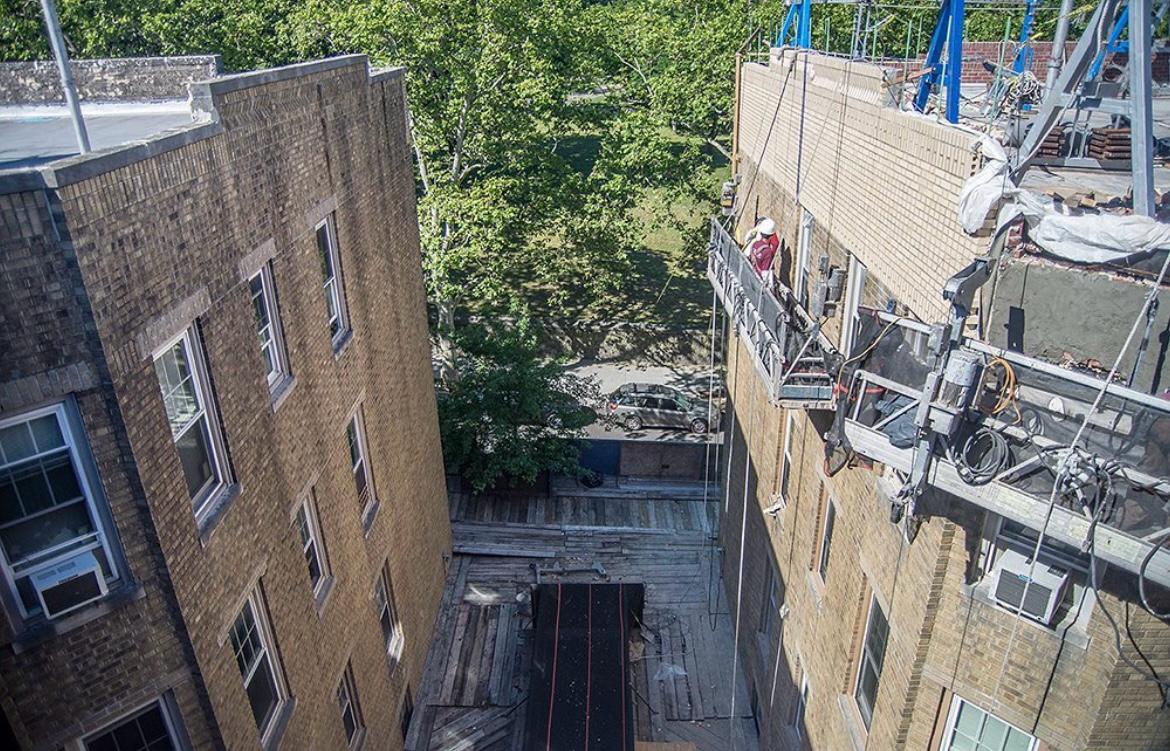
Facade restoration projects often involve more than repairing visible brickwork. On some buildings in Brooklyn and New York City, exterior inspections may identify conditions that require corrective work to address Local Law 11 and Facade Inspection Safety Program (FISP) violations.
In one project, the property owner contacted Bobby Contracts Inc. after the building was identified as needing facade repairs to resolve outstanding violations. The project required coordination with an engineer to develop the necessary repair plans and establish the scope of work.
What Work Was Completed?
The restoration project included several important exterior masonry repairs:
- Parapet wall rebuilding: Rebuilding the parapet to address the identified facade conditions.
- Lintel replacement: Replacing deteriorated or otherwise deficient lintels as specified in the repair scope.
- Brick pointing: Repairing mortar joints to restore the affected masonry.
- Suspended scaffolding: Carrying out the exterior work using suspended scaffolding to access the building facade.
Resolving the Identified Violations
Bobby Contracts Inc. coordinated with the engineer, completed the specified repairs, and helped the client address the violations identified for the project. According to the project information provided, the required work was completed so the property no longer had the reported violations.
This project illustrates how facade restoration can involve several interconnected building components. A parapet, window lintels, and deteriorated mortar joints may all require attention as part of a coordinated repair plan.
For property owners dealing with facade inspection findings, the appropriate repairs depend on the inspection report, the building’s condition, and the recommendations of the project’s qualified professionals.
If your property needs parapet repairs, lintel replacement, brick pointing, or other exterior masonry work, explore Bobby Contracts Inc.’s facade restoration services in Brooklyn, NY.
Choosing a Brownstone or Facade Restoration Contractor in Brooklyn
Selecting a contractor starts with understanding the type of work your building needs. Ask whether the proposed scope identifies the damaged materials, explains the recommended repairs, and addresses any known causes of deterioration.
It is also useful to review relevant project photographs, confirm licensing and insurance where applicable, and request a written estimate describing the work to be completed.
Bobby Contracts Inc. provides brownstone restoration and facade restoration services throughout Brooklyn. With over 20 years of construction experience, the company works on residential and commercial properties and offers free on-site inspections and written estimates.
If your property has damaged brownstone surfaces, deteriorating masonry, or other exterior problems, the right service can be determined after assessing the condition and scope of the required work.
Get a Brownstone or Facade Restoration Estimate in Brooklyn
Choosing between brownstone restoration and facade restoration starts with identifying the materials that need attention and understanding the cause of the deterioration. A careful assessment helps property owners determine whether they need localized brownstone repairs, broader facade restoration, or a combination of both.
Bobby Contracts Inc. provides brownstone restoration and facade restoration services throughout Brooklyn, including Park Slope, Brooklyn Heights, Cobble Hill, Carroll Gardens, Williamsburg, and surrounding neighborhoods.
Contact Bobby Contracts Inc. to request a free on-site inspection and written estimate for your property’s exterior restoration needs.
Frequently Asked Questions
Is brownstone restoration the same as facade restoration?
No. Brownstone restoration focuses on brownstone materials and the architectural features of brownstone properties. Facade restoration covers exterior walls and related components more broadly, including brickwork, mortar, stucco, lintels, parapets, and sealants. A brownstone building may need both services.
Is facade restoration suitable for brownstone buildings?
Yes. Facade restoration can address brickwork, mortar joints, parapets, lintels, sealants, and other exterior components on brownstone properties. Where brownstone surfaces or distinctive architectural details also require repair, brownstone restoration may be part of the overall project.
What causes brownstone facades to deteriorate?
Weather exposure, moisture, aging materials, incompatible previous repairs, and repeated temperature changes can contribute to surface deterioration. The specific cause should be assessed before selecting a repair method.
How do I know which restoration service my property needs?
The decision depends on the materials affected and the extent of the damage. If the primary concern is a damaged brownstone surface or stoop, brownstone restoration may be appropriate. If the problem involves brickwork, mortar joints, stucco, lintels, parapets, or multiple exterior components, facade restoration may be needed. An inspection can help establish the appropriate scope.
How much does brownstone or facade restoration cost in Brooklyn?
The cost depends on the property size, material condition, accessibility, repair methods, and amount of work required. A contractor should inspect the affected areas and provide a written estimate based on the actual scope rather than relying on a generic price.
Does restoration help protect a building from water damage?
Appropriate exterior repairs can help reduce water entry when they address the underlying problem. However, the solution depends on the source of moisture. Damaged masonry, failed sealants, roof transitions, and other conditions may require different repairs.