
Water entering through cracked parapet mortar, deteriorated roof seams, or failed exterior sealant is one of the primary causes of winter water damage in NYC buildings. Once temperatures drop below freezing, moisture trapped inside masonry and roofing assemblies expands, widens existing defects, and creates repair problems that are considerably more expensive than the original maintenance.
For owners of Brooklyn brownstones, pre-war brick rowhouses, and multi-family buildings with flat roofs, November is the time to inspect the exterior building envelope. A small opening around a coping stone or a deteriorated window joint might look insignificant in September, but repeated freeze-thaw cycles can turn it into a significant masonry or interior water intrusion problem by January.
A thorough pre-winter exterior waterproofing inspection in NYC should cover the roof membrane, parapet walls, drainage components, exterior masonry, window perimeters, stoops, and foundation. Property owners experiencing recurring water intrusion should arrange an inspection with experienced waterproofing contractors in Brooklyn, NY before freezing temperatures worsen existing defects.
The need for pre-winter exterior maintenance is particularly important across Brooklyn’s older residential neighborhoods. In Park Slope, historic brownstone facades and projecting stone details require regular inspection for spalling and deteriorated mortar. Bedford-Stuyvesant (Bed-Stuy) has numerous pre-war brick rowhouses where aging masonry joints and window lintels can become entry points for moisture. In Crown Heights, older multi-family buildings with flat roofs and parapet walls need proper drainage and membrane inspections before winter. Meanwhile, Brooklyn Heights properties with historic masonry, decorative facades, and exposed coping stones require careful attention to prevent freeze-thaw damage. Regardless of the neighborhood, identifying exterior defects before temperatures drop is essential to protecting the building envelope.
Here is what property owners should check before freezing weather arrives.
1. Why NYC Buildings Need Pre-Winter Waterproofing
Understanding the Freeze-Thaw Cycle
Water expands approximately 9% when it freezes. That expansion creates pressure inside porous building materials, including brick, brownstone, mortar, concrete, and deteriorated sealant joints.
The damage usually starts long before winter. Rainwater enters through hairline cracks, open mortar joints, failed flashing, and small membrane separations during warmer months. When temperatures fall, trapped moisture freezes and expands against the surrounding material.
As temperatures fluctuate, the water thaws and penetrates deeper. Repeated cycles gradually widen the original defect.
The resulting damage can include:
- Brick faces separating from the masonry substrate.
- Brownstone surfaces flaking or delaminating.
- Mortar joints cracking and losing their bond.
- Roof membrane seams separating.
- Water entering around window frames and steel lintels.
- Interior plaster damage, ceiling stains, and deteriorating wooden joists.
This is particularly concerning for older NYC buildings because many were constructed with masonry assemblies that depend on compatible, breathable materials to manage moisture.
Why Brooklyn Brownstones and Pre-War Buildings Are Vulnerable
Historic brownstones and pre-war brick rowhouses have several exterior components that require attention before winter.
Common problem areas include:
- Projecting brownstone sills and decorative belt courses.
- Terra cotta, concrete, and bluestone parapet coping.
- Aging brick mortar joints.
- Original steel window lintels.
- Flat roofing systems with aging seams.
- Garden-level entrances and exterior foundation walls.
In neighborhoods such as Park Slope, Bedford-Stuyvesant, Crown Heights, Brooklyn Heights, and Carroll Gardens, older masonry buildings frequently have multiple generations of repairs. Some repairs may have used incompatible materials that accelerate deterioration rather than prevent it.
Preventative Inspection vs. Emergency Repair
A preventative inspection can identify deteriorating mortar, open roof seams, and failed sealant before water reaches structural components.
Compare a relatively straightforward inspection and localized maintenance with the potential consequences of prolonged water intrusion:
| Preventative maintenance | Potential emergency consequences |
|---|---|
| Replacing deteriorated sealant | Interior wall and ceiling repairs |
| Repointing open mortar joints | Extensive masonry restoration |
| Repairing roof membrane seams | Wet insulation and roof deck replacement |
| Securing deteriorated coping | Falling masonry and façade repairs |
| Clearing roof drainage | Interior flooding and water damage |
The actual repair cost depends on the building’s condition, accessibility, materials, and extent of damage. A relatively inexpensive inspection cannot guarantee against every winter problem, but it can identify defects before they become larger repairs.
2. Roof and Parapet Walls: Stop Water at the Top
Flat roofs and parapet walls are among the most important areas to inspect before winter. Water entering at the roof perimeter can travel through masonry and appear inside the building several feet away from the original defect.
Inspect the Flat Roof Membrane
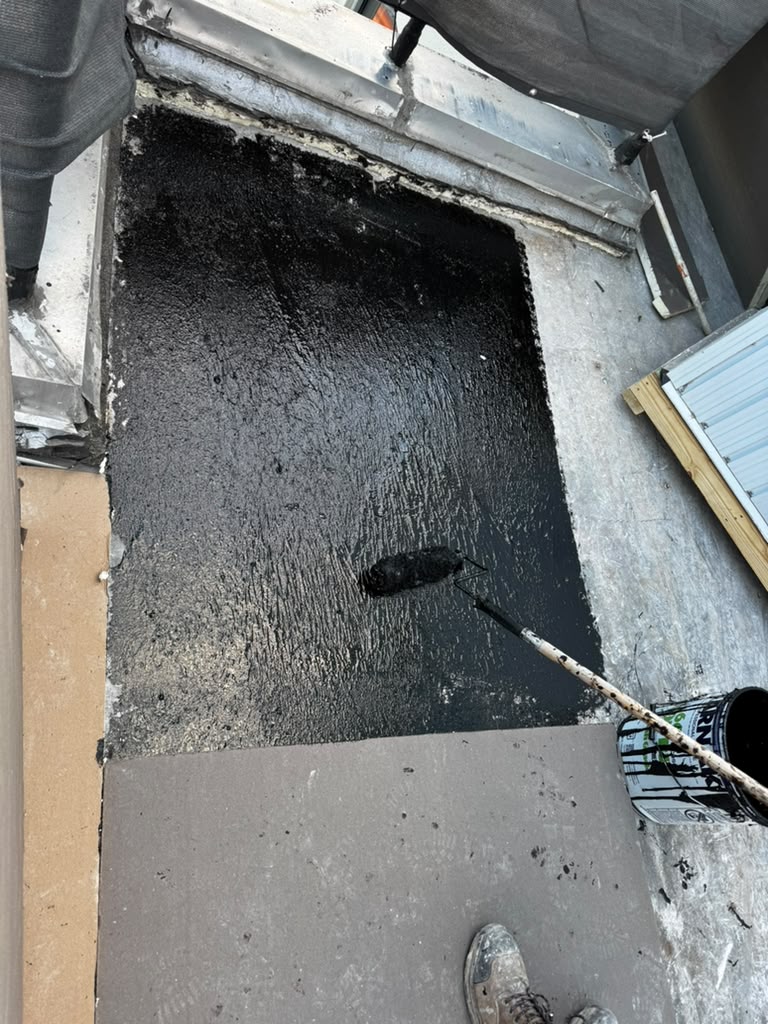
Start by examining the roofing system for visible deterioration.
NYC buildings commonly use modified bitumen (torch-down) and EPDM roofing systems. Both require regular inspection, particularly around seams, penetrations, drains, and flashing transitions.
Look for:
- Blisters or bubbles in modified bitumen membranes.
- Open or separated membrane seams.
- Shrinking or loose EPDM rubber laps.
- Cracks around rooftop penetrations.
- Deteriorated flashing at parapet transitions.
- Standing water that remains after normal drainage time.
- Soft or visibly deteriorated roof sections.
Ponding water deserves particular attention. Persistent standing water can indicate blocked drainage, insufficient slope, or a deteriorated roofing assembly.
Do not cover a failing roof with silver roof paint and assume the problem is fixed.
Reflective aluminum coatings and silicone roof coatings are not substitutes for repairing a compromised membrane. Applying a coating over wet insulation or a deteriorated roof assembly can conceal the underlying condition without correcting it. The existing moisture may continue damaging the roof deck and insulation.
A proper flat roof leak repair in Brooklyn starts with identifying the source of the water intrusion, checking the condition of the existing membrane, and determining whether localized repairs or a larger roofing intervention are necessary.
Inspect Parapet Walls and Coping Stones
Parapet walls are one of the most frequently overlooked sources of exterior water intrusion.
A parapet extends above the roofline and is exposed to rain, snow, wind, and repeated temperature changes. Its coping system protects the top of the masonry wall from direct water penetration.
Inspect the following:
- Cracked mortar joints between coping stones.
- Loose or displaced terra cotta, bluestone, or concrete coping.
- Open joints between adjacent coping sections.
- Failed sealant around coping transitions.
- Deteriorated flashing and counter-flashing.
- Cracked brickwork on the interior face of the parapet.
Coping stone mortar cracking repair should address the actual joint failure. Simply applying surface caulk over loose mortar or moving stones is not a permanent solution.
The contractor should assess the coping material, joint condition, drainage details, and flashing arrangement before selecting a repair method.
Clear Roof Drains, Scuppers, and Leader Pipes
Leaves, roofing debris, and accumulated silt can restrict water movement through flat roof drainage systems.
Before winter, inspect:
- Primary roof drains.
- Secondary overflow drains.
- Exterior scupper boxes.
- Leader pipes and downspout connections.
- Downspout elbows and discharge points.
A blocked scupper can cause water to accumulate along the parapet wall. When that water freezes, it can place additional stress on the roofing assembly and masonry joints.
Check downspout elbows for corrosion, rust splits, and disconnected joints. A damaged elbow can discharge runoff directly against exterior brickwork or foundation walls. Clear accessible debris safely from ground-level components. Roof drainage and elevated scupper repairs should be handled by qualified personnel. Buildings with deteriorating roof membranes may require professional roofing services in Park Slope, Brooklyn to address leaking seams, damaged flashing, and drainage-related problems.
3. Facades, Masonry, and Lintels: Protect the Building Envelope
Exterior masonry is not waterproof simply because it appears solid. Brick, brownstone, and mortar are porous materials that absorb and release moisture.
When joints deteriorate or protective details fail, water can penetrate the wall assembly and cause damage during freezing weather.
Check Brickwork and Mortar Joints
Walk around the building and examine the mortar joints between individual bricks.
Look for:
- Mortar that crumbles when lightly touched.
- Hollow or visibly deteriorated joints.
- Deeply recessed mortar.
- Hairline cracks around window and door openings.
- Missing mortar near parapets and projecting masonry.
- Water staining beneath masonry joints.
These are common indicators that the building may require brick repointing in Brooklyn.
Repointing involves removing deteriorated mortar to an appropriate depth and installing compatible replacement mortar. The objective is to restore the masonry joints without damaging the surrounding brick.
The Master Mason Rule: Never assume harder mortar means better protection.
Many historic pre-war buildings were constructed using relatively soft brick and lime-rich mortar. Replacing that mortar with an excessively hard Portland cement mixture can create a serious compatibility problem.
Hard mortar may prevent moisture from escaping through the joints. Instead, moisture movement and freeze-thaw stress can concentrate deterioration within the softer brick itself, causing the brick face to crack or spall.
Type N mortar may be appropriate for certain masonry applications, but mortar selection must be based on the original materials, brick strength, exposure conditions, and project specifications. Historic masonry often requires a carefully matched lime-based mortar rather than a standard high-strength mix.
Using the wrong mortar can turn a routine repointing project into an expensive façade restoration.
Identify Brownstone Spalling Before Winter
Brownstone deterioration is especially important on older Brooklyn residential buildings.
Spalling occurs when the exterior surface of the stone begins separating, flaking, or breaking away from the underlying material.
Check for:
- Hollow-sounding areas on brownstone surfaces.
- Flaking or peeling stone faces.
- Loose material around decorative details.
- Cracks along projecting window sills.
- Deterioration around belt courses and cornices.
- Water staining below stone projections.
A hollow sound can indicate delamination, although a professional assessment is needed to determine the actual condition.
Do not wait for loose material to fall onto the sidewalk. Deteriorated brownstone can create a pedestrian safety hazard, particularly around entrances and street-facing facades.
A professional brownstone facade repair in NYC may involve removing unsound material, preparing the substrate, applying compatible restoration materials, and addressing the source of moisture.
Inspect Steel Window Lintels for Rust Jacking
Steel lintels support the masonry above window and door openings. When water enters around exposed steel, corrosion can develop.
As steel rusts, its volume increases. This expansion creates pressure against surrounding masonry, a condition commonly called rust jacking.
Typical warning signs include:
- Horizontal cracks above windows.
- Brick courses lifting or separating.
- Rust staining beneath lintels.
- Cracked mortar near window openings.
- Bulging masonry above the window frame.
Painting over rust or applying sealant around the window does not correct an actively deteriorating lintel.
The steel condition, masonry support, flashing, and drainage details must be assessed. Depending on the extent of corrosion, repairs may involve steel treatment, protective coatings, flashing replacement, or lintel replacement.
Replace Failed Window Perimeter Sealant
Window perimeters are another common entry point for winter moisture.
Older sealant becomes brittle over time. It can shrink, crack, or separate from brick, stone, aluminum, and window frame surfaces.
Inspect the full perimeter of each window, paying particular attention to:
- Upper horizontal joints.
- Vertical frame-to-masonry joints.
- Lower sill transitions.
- Corners where two different materials meet.
- Areas with visible gaps or previous patch repairs.
Where appropriate, deteriorated sealant should be removed and replaced with a compatible commercial-grade polyurethane or elastomeric sealant.
Surface preparation matters. Applying new sealant over loose material, dirt, or existing failed caulk often results in another premature failure.
4. Ground-Level Waterproofing: Stoops, Areaways, and Exterior Slabs
Water intrusion does not always originate from the roof. Ground-level masonry and concrete details can direct runoff toward the foundation and garden-level portions of the building.
Inspect Brownstone Stoops and Front Steps
Cracked stoop mortar and deteriorated joints can allow melting snow and rainwater to penetrate beneath the steps.
On buildings with garden-level apartments, moisture can travel through the underside of the stoop and appear as staining or deterioration on the interior ceiling.
Look for:
- Open mortar joints between stone steps.
- Cracks in concrete or brownstone treads.
- Separation between the stoop and building wall.
- Deteriorated side masonry.
- Water staining beneath the front entrance.
A proper repair should address the source of water entry and restore the affected joints or masonry. Applying a surface coating without repairing the underlying defects is unlikely to solve the problem.
Check Garden-Level Areaways
Garden-level areaways can collect leaves, dirt, and debris during autumn.
Inspect the drainage grates and surrounding surfaces for visible blockages. Where the drainage system is safely accessible, a controlled water test can help identify whether water is moving through the drain.
Watch for:
- Standing water around the entrance.
- Cracked areaway walls.
- Deteriorated joints around the door frame.
- Water staining on adjacent foundation masonry.
- Blocked or damaged drain covers.
Persistent water accumulation should be investigated before freezing weather turns the area into an ice hazard.
Inspect Sidewalk and Yard Slab Joints
The joint between the building foundation and an adjoining sidewalk, patio, or concrete slab can become an entry point for surface runoff.
Inspect these joints for:
- Open gaps along the foundation wall.
- Cracked expansion-joint material.
- Separation between concrete and masonry.
- Negative grading that directs water toward the building.
Appropriate joint sealing and grading corrections can help prevent surface water from collecting against the exterior foundation.
5. Below-Grade Waterproofing: Prevent Basement Moisture Problems
Basement moisture problems should be evaluated separately from above-grade exterior defects. The visible water may originate from surface runoff, foundation deterioration, plumbing issues, or groundwater pressure.
Identify Efflorescence on Foundation Walls
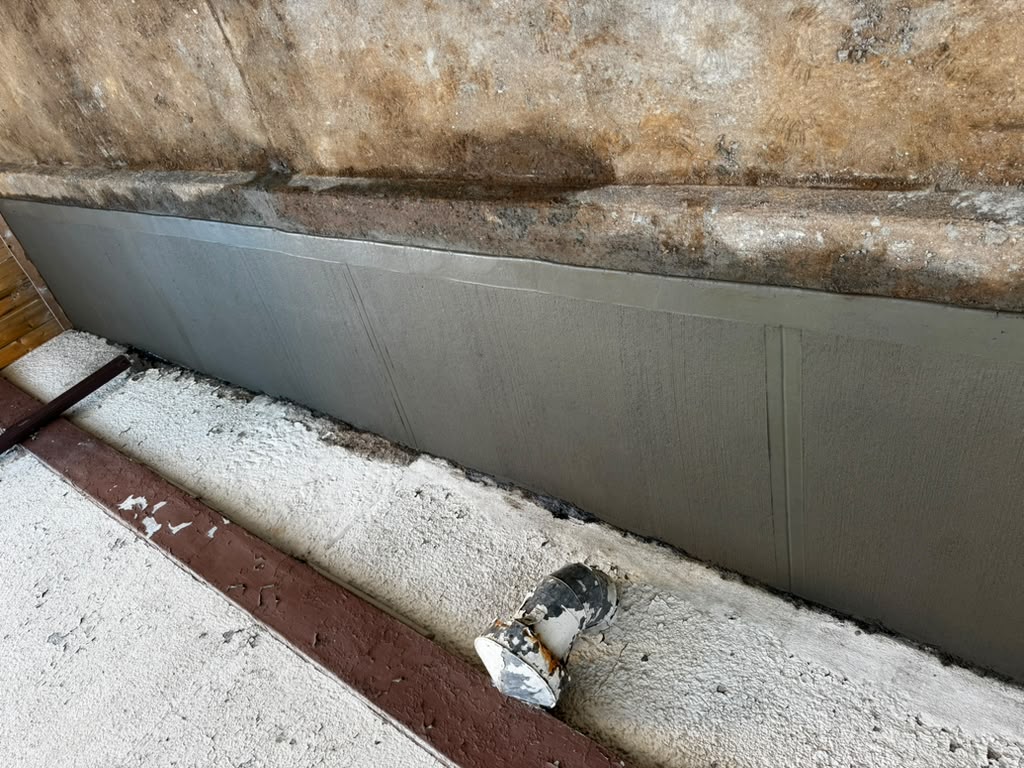
Efflorescence appears as white, powdery or crystalline deposits on masonry surfaces.
It develops when moisture moves through porous materials and carries dissolved mineral salts toward the surface. As the water evaporates, those salts remain behind.
Check for:
- White mineral deposits on brick foundation walls.
- Damp patches near floor-level masonry.
- Peeling paint or deteriorating interior finishes.
- Persistent musty odors.
- Repeated moisture staining after rainfall.
Efflorescence is evidence of moisture movement, but it does not identify the precise source on its own. A professional assessment should distinguish between exterior water penetration, condensation, plumbing leaks, and groundwater-related moisture. Persistent water intrusion, damp foundation walls, and recurring basement leaks may require professional basement waterproofing in Brooklyn
Distinguish Surface Runoff from Hydrostatic Pressure
These two conditions require different diagnostic approaches.
Surface runoff: Water collects near the building because of blocked drainage, damaged downspouts, poor grading, or improperly directed roof discharge.
Hydrostatic pressure: Groundwater exerts pressure against below-grade walls and beneath the foundation slab. This can contribute to water entering through cracks, wall-floor joints, and other weak points.
Water seeping through a basement floor after heavy rain in Brooklyn may indicate a groundwater-related issue, but the cause should be confirmed before selecting a waterproofing system.
Perform a Sump Pump Winter Inspection
Buildings with existing sump pump systems should have them checked before winter storms.
Inspect:
- Pump operation.
- Float switch movement.
- Discharge line condition.
- Check valve operation.
- Electrical connections.
- Battery backup condition, where installed.
A pump that fails during a major rainstorm can allow water to accumulate in the basement.
Test the system according to the manufacturer’s instructions. Electrical work and repairs to faulty equipment should be handled by qualified professionals.
6. Quick-Reference NYC Winter Waterproofing Checklist
Use this table as a starting point when inspecting a brownstone, pre-war rowhouse, or multi-family building.
| Building Area | Symptom to Look For | Recommended Action |
|---|---|---|
| Flat roof | Blisters, open seams, ponding water | Diagnose membrane and drainage defects |
| Parapet walls | Cracked mortar and loose coping | Repair joints and secure coping |
| Roof drains | Leaves, silt, restricted drainage | Clear accessible debris and inspect outlets |
| Brick facade | Powdery or missing mortar | Perform compatible masonry repointing |
| Brownstone facade | Hollow areas and spalling | Assess and restore deteriorated stone |
| Window lintels | Rust staining and lifted brickwork | Inspect and repair corroded steel |
| Window perimeters | Cracked or separated caulking | Replace failed sealant |
| Front stoops | Cracked treads and open joints | Repair masonry and seal appropriate joints |
| Garden areaways | Standing water and blocked grates | Investigate and restore drainage |
| Foundation walls | Efflorescence and damp patches | Diagnose the moisture source |
| Basement floor | Water at slab joints | Investigate groundwater and foundation conditions |
| Sump pump | Faulty float or failed backup | Test and service the existing system |
Best time to complete the inspection: Before sustained freezing temperatures begin, ideally during October or November.
7. When Should You Call a Professional Waterproofing Contractor?
Not every exterior defect requires a major restoration project. However, certain conditions should not be handled as DIY maintenance.
Property owners can safely perform basic visual inspections from accessible ground-level areas, remove accessible debris from ground-level drains, and document visible cracks or staining.
Professional assistance is necessary when the work involves:
- Elevated flat roofs and parapet walls.
- Loose coping stones or deteriorating façade components.
- Scaffold access and suspended rigging.
- Structural masonry cracks.
- Corroded steel lintels.
- Extensive brownstone spalling.
- Failed roof flashing or membrane systems.
- Active water intrusion through foundation walls.
In NYC, exterior façade work must also comply with applicable building codes, safety requirements, and Local Law 11/FISP obligations where applicable.
A contractor should identify the actual entry point before recommending a repair. If water appears on an interior ceiling, the source could be a roof seam, parapet joint, exterior wall defect, or window transition several feet away.
Treating the visible stain without investigating the exterior assembly often results in repeat leaks.
Schedule Your Pre-Winter Exterior Waterproofing Inspection
Winter water intrusion is rarely caused by one dramatic failure. More often, it starts with a deteriorated mortar joint, a separated roof seam, an open coping joint, or a failed window perimeter seal.
For Brooklyn property owners, addressing these defects before freezing temperatures arrive can help prevent larger masonry, roofing, and interior repair problems.
Bobby Contracts Inc. provides exterior waterproofing, roofing, masonry, and façade restoration services throughout Brooklyn, NY. With over 20 years of experience, the company helps residential and commercial property owners identify exterior building envelope problems and determine the appropriate repairs.
Whether your property needs parapet wall repair, brick repointing, brownstone restoration, flat roof leak repair, or exterior foundation waterproofing, an inspection can help establish the condition of the building before winter.
Contact Bobby Contracts Inc. to schedule an exterior building envelope inspection and request a free estimate.
Frequently Asked Questions
1. When should I waterproof my NYC property before winter?
October and November are generally good months for pre-winter inspections in NYC. The objective is to identify and repair deteriorated roof seams, parapet joints, masonry cracks, and failed sealant before sustained freezing temperatures arrive.
2. Why does my brownstone leak around windows?
Water commonly enters through deteriorated perimeter caulking, cracked mortar joints, failed window flashing, or damaged masonry above the opening. Steel lintel corrosion can also create cracks that allow moisture to enter the wall assembly.
3. How do I prevent ice dams on a flat roof in NYC?
Maintain clear roof drains and scuppers, correct drainage problems, inspect membrane seams, and investigate persistent ponding. Ice-related problems may also involve insulation, ventilation, and roof assembly conditions. A professional roof assessment is preferable to applying a coating over an existing defect.
4. What causes efflorescence on basement foundation walls?
Efflorescence forms when moisture moves through masonry and carries dissolved mineral salts to the surface. As the moisture evaporates, the salts remain behind as white deposits. The underlying moisture source must be identified before selecting a repair.
5. Can I use Portland cement to repair historic Brooklyn brickwork?
Not automatically. Older brick buildings often require softer, more compatible mortar. An excessively hard Portland cement mix can damage historic brick by restricting moisture movement and concentrating deterioration within the brick itself. Mortar composition should be selected based on the original masonry and site conditions.
6. How much does freeze-thaw brick damage repair cost?
The cost depends on the extent of deterioration, affected masonry area, material requirements, and access conditions. Localized repointing may be relatively straightforward, while extensive brick replacement, façade restoration, or scaffold work can significantly increase the project cost.
7. What should be included in a building envelope inspection in NYC?
A comprehensive inspection should assess the roof membrane, parapet walls, coping stones, flashing, exterior masonry, mortar joints, window perimeters, steel lintels, and accessible foundation areas. The inspection should document visible defects and identify likely water entry points.
8. Does exterior waterproofing help prevent basement leaks?
It can, depending on the source of the moisture. Repairing exterior foundation cracks, deteriorated masonry, and failed waterproofing details can reduce water penetration. However, groundwater pressure, plumbing leaks, and surface drainage problems require different diagnostic approaches.