
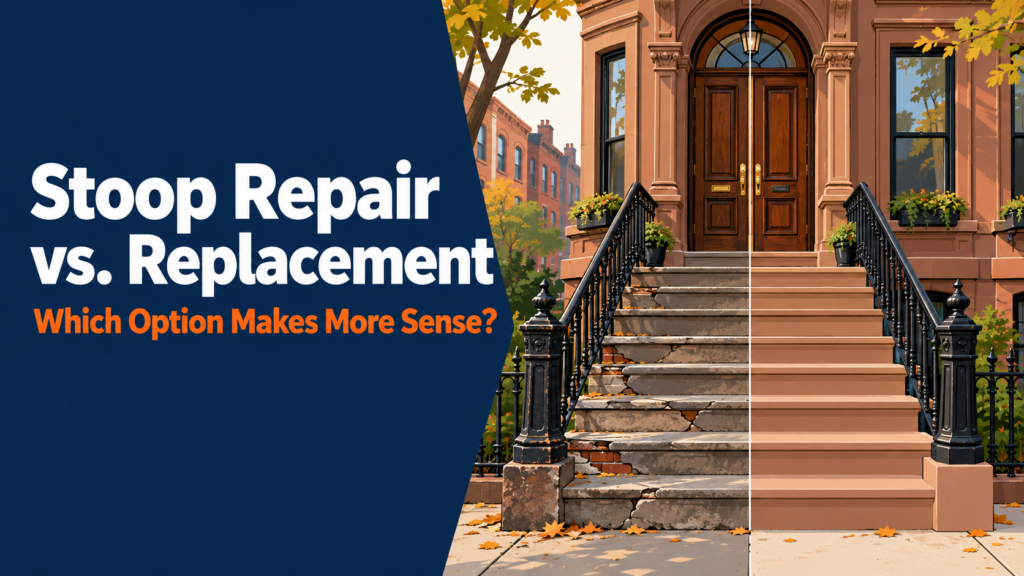
Brownstone Stoop Repair vs. Replacement: Which Option Makes More Sense?
A damaged brownstone stoop can affect more than your property’s appearance. Cracked steps, loose masonry, and uneven surfaces can make the entrance unsafe and allow water to damage surrounding materials. But does every damaged stoop need to be rebuilt?
Not necessarily. In many cases, targeted repairs can restore the existing structure. In others, the damage may be extensive enough that replacement becomes the more practical option.
For Brooklyn homeowners and property managers, understanding the difference between brownstone stoop repair vs replacement can help avoid unnecessary construction costs while protecting the building’s original character.
At Bobby Contracts Inc., we have over 20 years of experience providing brownstone restoration, masonry, waterproofing, and construction services throughout Brooklyn and NYC. We help property owners assess exterior damage and determine the appropriate scope of work for their buildings.
In this guide, we’ll explain when brownstone stoop repair makes sense, when replacement may be necessary, what affects the cost, and what to consider before starting a project.
What Is Brownstone Stoop Repair?
A brownstone stoop is the raised entrance and exterior staircase commonly found on traditional townhouses in Brooklyn. Depending on the property, it may include stone or concrete steps, brick or masonry side walls, a landing, railings, and decorative details.
Over time, these components can deteriorate because of the moisture, temperature changes, regular use and previous repairs that were not suited to the original materials.
Brownstone stoop repair in brooklyn mainly focuses on fixing the damaged sections of a brownstone while retaining as much of the existing structure as practical. The work may involve patching deteriorated stone, repairing cracked steps, replacing damaged masonry, restoring mortar joints, or securing loose components.
Replacement is different. It involves rebuilding some or all of the stoop when the existing structure cannot be repaired reliably or when deterioration is too extensive.
The point is not how old the stoop is, but whether it can be repaired safely and properly.
When Is Brownstone Stoop Repair Enough?
Repair may be a good option when the damage is limited to a few areas and the main structure is still in good condition.
Here are some signs that your roof may only need minor repairs.
1. Small Cracks or Surface Damage
Minor cracks, chips, and localized surface deterioration do not automatically mean an entire stoop needs replacement.
A contractor can assess the affected material, determine whether the damage is superficial or deeper, and recommend a compatible repair method. The cause should also be investigated, especially if water may be entering through the damaged area.
2. Deteriorated Mortar Joints
The mortar between bricks can weaken over time. If the bricks are still in good condition, replacing the damaged mortar can help strengthen the joints and prevent water from getting inside.
However, loose bricks, extensive cracking, or movement in the surrounding structure may indicate a more significant problem.
3. Localized Stone or Concrete Damage
Individual treads, landing edges, or small sections of masonry may sometimes be repaired without rebuilding the entire entrance.
The suitability of a patch depends on the depth of the damage, the condition of the surrounding material, and whether the repair can bond properly. A surface patch will not solve a structural problem beneath the step.
4. The Main Structure Remains Stable
If the steps, landing, side walls, and supporting components remain stable, repairing the damaged areas may preserve more of the original stoop.
A professional inspection is important because visible surface damage does not always reveal the condition of the materials underneath.
When Should You Replace a Brownstone Stoop?
Sometimes, repairing individual sections is no longer the most practical approach. Brownstone stoop replacement may be necessary when the structure has widespread deterioration or cannot be made safe through localized repairs.
1. Extensive Structural Damage
If several steps are broken, sections are shifting, or the landing and side walls show significant movement, the contractor needs to assess the entire structure.
Replacement may be appropriate if the supporting components are severely deteriorated or repairs would leave major underlying problems unresolved.
2. Repeated Repairs Have Failed
If the same sections keep cracking or deteriorating after previous repairs, the underlying cause may not have been addressed.
Moisture entry, movement, incompatible repair materials, or deterioration beneath the surface can contribute to recurring damage. Before approving another repair, determine why earlier work failed.
3. Steps Are Uneven or Unsafe
Loose treads, unstable railings, broken step edges, and noticeable movement can create fall hazards.
These conditions should be assessed promptly. Depending on their extent, the solution may involve repairing individual components or rebuilding a larger section of the entrance.
4. Too Much of the Original Material Has Deteriorated
Brownstone is a type of sandstone that can wear down over time due to weather and moisture. If large parts are badly damaged, some stones or entire sections of the stoop may need to be replaced.
The goal should be to retain sound original material wherever practical while restoring safety and durability.
Brownstone Stoop Repair vs. Replacement: Key Differences
| Factor | Repair | Replacement |
|---|---|---|
| Scope | Addresses specific damaged areas | Rebuilds part or all of the stoop |
| Existing materials | Retains more original material | May require new stone, brick, or other suitable materials |
| Project cost | Often lower when damage is limited | Usually higher for extensive reconstruction |
| Construction time | Often shorter for localized work | Usually longer for larger projects |
| Best suited for | Localized damage with a sound supporting structure | Extensive deterioration or an unsafe structure |
These are general comparisons. The actual scope, cost, and timeline depend on the stoop’s condition, access, materials, and required approvals.
How Much Does Brownstone Stoop Repair or Replacement Cost?
The brownstone stoop repair cost can vary considerably from one property to another. A small repair to a damaged tread is very different from restoring multiple steps, masonry walls, and railings.
Likewise, the brownstone stoop replacement cost depends on how much of the structure must be rebuilt and which materials are required.
Several factors influence the estimate:
- Extent of damage: Localized repairs generally require less work than rebuilding an unstable or extensively deteriorated stoop.
- Material selection: Matching existing brownstone, brick, stone, or concrete can affect material and labor costs.
- Structural work: Damaged supporting masonry or underlying components may require additional repairs.
- Access and site conditions: Limited working space and the need to protect adjacent property can affect the project.
- Railings and decorative details: Restoring or replacing these features adds to the scope.
- Permits and approvals: Requirements depend on the property, proposed work, and whether it is landmarked or located in a historic district.
Avoid choosing a contractor based only on the lowest estimate. Compare the proposed repair method, materials, preparation, structural work, and warranty terms.
For a more reliable figure, request an on-site assessment and a written estimate that clearly explains what will be repaired or replaced.
Why Material Matching Matters for Brooklyn Brownstones
A stoop is often one of the most visible features of a Brooklyn brownstone.Even if the repair is done correctly, it may look different from the rest of the stoop if the new material has a different color, texture, or finish.
Before starting work, ask the contractor how they will match the existing brick or stone and keep the entrance’s original design details.
The NYC Landmarks Preservation Commission’s Rowhouse Manual provides guidance on maintaining and repairing masonry stoops, handrails, and fences. It also discusses replacing deteriorated components with appropriate materials and designs.
If your building is a landmark or located in a historic district, check the rules before starting repairs. The NYC Landmarks Preservation Commission’s rules and guides explain the requirements and approvals you may need.
The appropriate approach depends on the property and the proposed work, so do not assume that every repair or replacement can proceed without approval.
How to Choose the Right Contractor for Stoop Repair
A good assessment should explain both the visible damage and its likely cause.
Before hiring a contractor, ask:
- Which components need repair, and which can remain?
- Is there evidence of movement or deterioration beneath the surface?
- What materials will be used, and how will they match the existing stoop?
- Will the proposed work address the source of recurring damage?
- Are permits or landmark approvals required?
- What exactly is included in the written estimate?
For a broader look at exterior deterioration, you can also explore Bobby Contracts’ brownstone restoration services in Brooklyn.
If your steps are broken, loose, or unsafe, visit our step repair contractors in Brooklyn page to learn about repair and rebuilding options.
You can find additional property maintenance and restoration guidance on the Bobby Contracts blog.
Make the Right Decision for Your Brownstone Stoop
The choice between brownstone stoop repair vs replacement comes down to the condition of the existing structure, the extent of deterioration, and whether repairs can provide a safe and lasting result.
Localized cracks, damaged mortar, and isolated surface defects may be repairable. Extensive structural damage, unstable steps, or widespread deterioration may call for partial or complete replacement.
At Bobby Contracts Inc., we provide brownstone restoration and step repair services throughout Brooklyn and NYC. With over 20 years of experience, we help property owners assess damage, compare options, and plan work that respects the building’s character.
Visit our brownstone restoration contractors in Brooklyn page to learn more or request an estimate.
The best approach is to identify the cause of the damage first, then choose the repair or replacement method that fits your property’s actual needs.
Restore or Rebuild Your Stoop with Confidence
From minor patch repairs and repointing to complete structural rebuilding with accurate historic color-matching, Bobby Contracts Inc. brings 20+ years of hands-on expertise to Brooklyn townhouses.
Frequently Asked Questions
Is Repairing a Brownstone Stoop Cheaper Than Replacing It?
Repair is often less expensive when the damage is limited and the main structure remains sound. Replacement generally involves more labor and materials, but it may be more practical when deterioration is widespread.
Can cracked brownstone steps be repaired?
Sometimes. The best repair method depends on how deep the cracks are, the condition of the surrounding stone, and whether the structure is stable. A professional inspection can help determine whether the cracks can be patched, damaged stones need replacing, or larger sections must be rebuilt.
How do I know if my brownstone stoop is unsafe?
Look for loose steps, noticeable movement, uneven treads, broken edges, unstable railings, and significant cracking. Restrict access to visibly unstable areas and arrange a professional assessment.
Does brownstone stoop replacement require a permit in NYC?
Rules depend on the property and the type of work. If you plan to replace or change a stoop, you may need approval, especially if the building is a landmark. Check with the relevant NYC agency before starting work.
How long does brownstone stoop repair take?
The repair time depends on the damage, the materials needed, site access, and any required approvals. Small repairs usually take less time than rebuilding the entire stoop.