
EPDM vs. TPO vs. Modified Bitumen: Which Flat Roofing System Is Best for Brooklyn Buildings?
Flat roofing on a New York City rowhouse or historic brownstone operates under vastly different conditions than a suburban commercial warehouse or a pitched asphalt-shingle roof.
Between extreme seasonal temperature swings—freezing nor’easters dropping below $15^\circ\text{F}$ followed by humid summer heat waves exceeding $95^\circ\text{F}$—dense rooftop mechanicals, party-wall parapets, and regular foot traffic from HVAC technicians and rooftop terraces, choosing the wrong flat roofing membrane leads to premature joint splits, seam failures, and recurring top-floor ceiling leaks.
The three primary single-ply and multi-ply membranes installed across New York City today are Modified Bitumen (Torch-Down / Cold-Applied), EPDM (Ethylene Propylene Diene Monomer / Rubber), and TPO (Thermoplastic Polyolefin).
Below is an engineering and contractor breakdown comparing material lifespans, puncture resistances, seam integrity, fire ratings, and realistic Brooklyn installation costs.
What Are EPDM, TPO, and Modified Bitumen Roofing?
Before comparing these commercial flat roofing systems, it helps to understand how each material works.
EPDM roofing: EPDM is a rubber sheet used on flat roofs. It is flexible and can also handle changes in temperature. It can be glued down or fixed with fasteners.
TPO roofing: TPO is a roofing sheet that comes in white or other light colors. Its seams are joined using heat. White TPO can help reflect sunlight and keep the building cooler.
Modified bitumen roofing: This roofing is made from asphalt mixed with other materials for extra strength. It is usually installed in layers using glue, self-adhesive sheets, or heat.
All three roofing types can protect your building from water leaks when installed properly. The best choice depends on your building and its roofing needs.
Which Membrane Is Best for Your Building?
- Best Overall for Historic Brooklyn Rowhouses & Brownstones: Modified Bitumen (2-Ply SBS or APP with Granular / Silver Reflective Surface). Its multi-layer puncture resistance withstands foot traffic, chimney work, and debris, while flashing seamlessly into irregular historic brick parapets.
- Best for Low-Budget, Large Open Spans with Few Obstructions: EPDM Rubber (60-mil fully adhered). Highly flexible in sub-zero freezes, but vulnerable to punctures from foot traffic and mechanical punctures.
- Best for Maximum Energy Efficiency & Clean Modern Construction: TPO (60-mil or 80-mil heat-welded). Bright white solar reflectance lowers top-floor cooling bills and creates seamless heat-welded joints, but requires careful detailing around complex historic brick parapets.
EPDM vs. TPO vs. Modified Bitumen: Key Differences
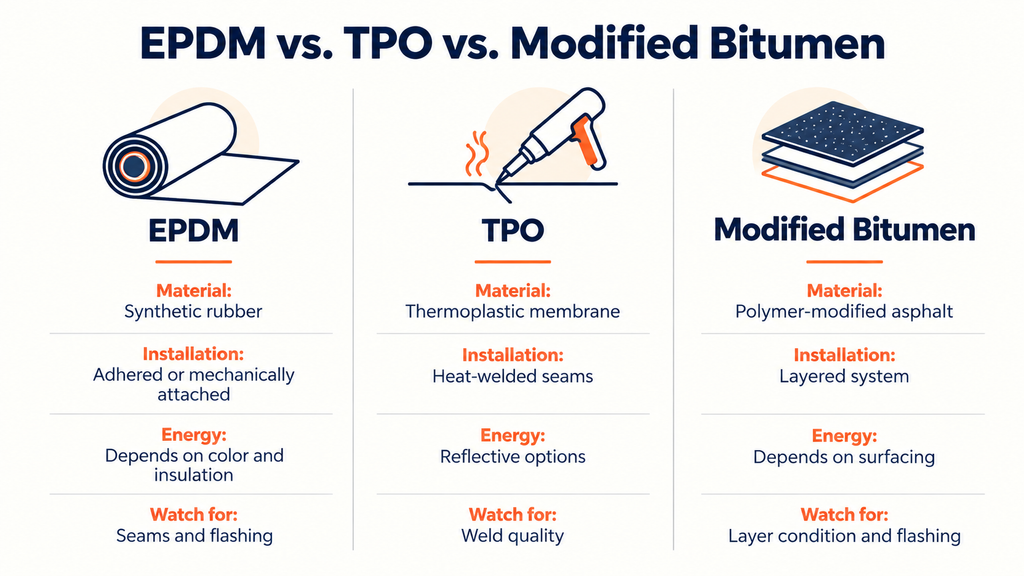
EPDM vs. TPO vs. Modified Bitumen: Key Differences
| Feature | EPDM Roofing | TPO Roofing | Modified Bitumen Roofing |
|---|---|---|---|
| What is it made of? | A flexible synthetic rubber membrane. | A thermoplastic roofing membrane, available in white or light colors. | An asphalt based roofing material reinforced with polymers and installed in layers. |
| How is it installed? | The membrane is glued to the roof or secured with fasteners. | The membrane is glued or secured with fasteners, and its seams are usually joined using heat. | The roofing material is installed in layers using approved methods, such as adhesive or heat application. |
| Energy efficiency | Energy performance depends on the membrane color, insulation, and roof design. | White and light-colored surfaces can reflect sunlight and may help reduce cooling needs. | Energy performance depends on the roof surface, insulation, and overall roof design. |
| Maintenance requirements | Inspect regularly for leaks, damaged seams, loose areas, and holes. | Inspect regularly for leaks, damaged heat-welded seams, and holes. | Inspect regularly for leaks, damaged layers, cracks, and worn surfaces. |
| What should you check? | Ensure the seams are sealed properly and the rubber membrane is protected from damage. | Ensure the seams are heat-welded correctly and the membrane meets the project’s requirements. | Ensure the layers are installed correctly and the roofing surface remains in good condition. |
| Best suited for | Buildings that need a flexible roofing membrane with repairable sections. | Buildings where reflective roofing and properly welded seams are important. | Buildings where a layered asphalt-based roofing system suits the roof design. |
These are general characteristics. The Actual performance usually depends on the selected product, installation quality, and maintenance.
1. EPDM Roofing: Pros and Cons
EPDM is worth considering when flexibility and established installation methods are priorities.
Advantages of EPDM roofing:
- Flexible construction: The rubber membrane can accommodate temperature-related movement when properly installed.
- Installation choices: Depending on the system, it can be adhered or mechanically attached.
- Repair options: Localized membrane damage may be repairable without replacing the entire roof.
- Established track record: EPDM has been used on residential and commercial roofs for decades.
Disadvantages:
- Traditional black EPDM absorbs more solar heat than many reflective white membranes.
- Seams, flashing, and roof penetrations need proper installation and periodic inspection.
- Unprotected areas may be vulnerable to punctures from tools, equipment, and regular rooftop traffic.
When is EPDM a good choice?
EPDM may suit Brooklyn properties where a flexible membrane fits the roof design and the owner has a practical maintenance plan. Ask your contractor how seams, roof edges, parapet walls, and penetrations will be sealed.
2. TPO Roofing: Pros and Cons
TPO is a quite popular option for commercial flat roofs, particularly where reflective roofing is a priority.
Advantages of TPO roofing:
- White and light-colored options can reflect sunlight.
- Heat welded seams can form strong bonds when installed correctly.
- Reflective surfaces may help reduce cooling demand under appropriate conditions.
Disadvantages:
- Incorrectly welded seams can become weak points in the roofing system.
- Membrane formulations and product specifications vary between manufacturers.
- Foot traffic, tools, and rooftop equipment can damage exposed sections.
When is TPO a good choice?
TPO may be worth considering for Brooklyn offices, retail properties, and apartment buildings where reflective performance is important. However, compare insulation requirements, membrane specifications, and installation quality rather than choosing based on color alone.
The U.S. Department of Energy’s guide to cool roofs explains how reflective roofing can affect heat absorption and building energy use.
3. Modified Bitumen Roofing: Pros and Cons
Modified bitumen is made from asphalt and installed in layers. It works well for some flat and low-slope roofs.
Advantages of modified bitumen roofing:
Advantages for Brooklyn Properties:
- Multi-Ply Durability: Unlike single-ply sheets that measure just 45 to 60 mils thick, a 2-ply modified bitumen system provides a thicker structural barrier. If the top cap sheet suffers a minor surface scrape from a dropped tool or windblown branch, the waterproof base sheet underneath keeps the building dry.
- Complex Detailing on Historic Parapets: Brooklyn rowhouses share masonry party walls with neighbors. Tying into aged brick, irregular brownstone parapets, skylight curbs, and chimney corners is significantly more reliable with modified bitumen flashing cements and torch/adhesive applications than stretching rigid synthetic sheets.
- Proven Track Record: Modified bitumen has protected New York City brownstones for over 40 years with predictable maintenance schedules.
Disadvantages:
- Heat Absorption (Unless Coated): Traditional dark mineral surfaces absorb substantial heat. In NYC, code and good practice require applying an aluminum reflective silver coating or selecting an Energy Star white granule cap sheet.
- Routine Maintenance Required: Smooth-surface and mineral-surfaced modified bitumen systems require silver roof recoating every 3 to 5 years to prevent UV oxidation and asphalt crazing.
For a deeper look into maintenance timelines, explore our detailed analysis on how long do flat roofs last on NYC brownstones.
When is modified bitumen a good choice?
It may be appropriate when the existing roof construction, access conditions, and maintenance requirements suit a layered system. A professional inspection should determine whether old materials need removal and whether the roof deck or insulation requires repair.
Which Flat Roofing System Is Best for Brooklyn Buildings?
The best flat roofing system for a Brooklyn building depends on the roof’s condition, insulation, budget, and maintenance needs. EPDM, TPO, and modified bitumen are three common options for flat and low-slope roofs. Each offers different benefits.
- EPDM roofing is a flexible rubber membrane that can be glued down or secured with fasteners. It is a good option for buildings that need a flexible roofing system with repairable sections.
- TPO roofing is a thermoplastic membrane available in white and other light colors. Its seams are usually joined with heat, and its reflective surface can help reduce solar heat absorption.
- Modified bitumen roofing is an asphalt-based roofing system installed in layers. It can suit buildings where a layered roofing system meets the roof’s design and project requirements.
Brooklyn has many types of properties, including brownstones, apartment buildings, retail spaces, and warehouses. Each property may have different roofing requirements. The lifespan of a flat roofing system depends on the material, installation quality, maintenance, and weather exposure. Read our guide to flat roof lifespan in NYC brownstones to understand the factors that influence long-term performance.
For example, a small residential roof may need a different solution from a commercial building with several HVAC units, vents, and frequent rooftop maintenance. The condition of the existing roof, insulation, and drainage system should also be considered.
Before choosing a roofing material, ask a qualified contractor to inspect the roof membrane, roof deck, insulation, flashing, parapet walls, and roof penetrations. These components can affect installation costs, waterproofing, and the long-term performance of the new roof.
If you need help choosing a roofing system, visit Bobby Contracts’ roofing services in Brooklyn to discuss your property’s requirements.
What Affects Flat Roofing Costs in Brooklyn?
The cost of installing EPDM, TPO, or modified bitumen roofing depends on several factors, including the roof’s size, existing condition, materials, and installation requirements. The cheapest material is not always the most cost-effective option over time.
The main factors that affect flat roofing costs in Brooklyn include:
- Existing roof condition: Damaged roof decking or wet insulation may need to be repaired or replaced before installing the new roof.
- Old roofing removal: Removing and disposing of existing roofing materials can increase labor and project costs.
- Insulation requirements: The type and thickness of insulation affect the cost of the complete roofing system.
- Roof complexity: Parapet walls, vents, HVAC units, and other roof penetrations require additional detailing and labor.
- Installation method: EPDM, TPO, and modified bitumen use different installation methods, which affect material, labor, and safety requirements.
- Flashing and waterproofing details: Properly sealing roof edges, joints, and penetrations is essential to help prevent leaks.
How to Compare Roofing Estimates
When comparing roofing contractors in Brooklyn, request an itemized estimate that includes:
- Roofing material and product specifications
- Insulation and roof deck repairs
- Removal and disposal of old materials
- Flashing and waterproofing details
- Labor and installation costs
- Manufacturer and contractor warranty terms
Comparing estimates with the same scope of work helps you understand the actual cost of each roofing system and avoid unexpected expenses.
How to Choose the Right Flat Roofing System for Your Property
The best flat roofing system for a Brooklyn building is the one that meets its waterproofing, insulation, durability, and maintenance requirements while fitting the project budget.
Choose EPDM if flexibility, installation options, and the ability to repair localized damage are important.
TPO if you want reflective roofing options and properly heat-welded seams.
Choose modified bitumen if a layered asphalt-based roofing system suits your existing roof and building requirements.
All three systems can provide effective waterproofing when the materials are suitable for the project and installed correctly. However, no single system is best for every building. A professional roof inspection is the most reliable way to determine which option suits your property.
Brooklyn Roofing Services by Bobby Contracts Inc.
Bobby Contracts Inc. has over 20 years of experience providing roofing, masonry, waterproofing, and construction services throughout Brooklyn and New York City.
We help homeowners, businesses in brooklyn and property managers assess their roofing needs, identify potential problems, and plan suitable roofing solutions.
Planning a flat roof repair or replacement? Visit our Brooklyn roofing contractors service page to learn more about our services or request an estimate.
Get the Right Flat Roof Installed the Right Way
Whether your property requires reflective TPO, flexible EPDM, or heavy-duty Modified Bitumen, Bobby Contracts Inc. brings 20+ years of NYC roofing expertise to deliver watertight results.