

Roof Leaks in SoHo Loft Buildings: Common Causes and Repair Options
A small water stain on the ceiling of a SoHo loft can point to a much bigger roofing problem. Water may enter through a damaged roof membrane, loose flashing, a parapet wall, or a poorly sealed rooftop opening. By the time the leak becomes visible inside, moisture may already have traveled through several layers of the building.
SoHo has many older buildings, converted lofts, commercial spaces, and historic properties with flat or low-slope roofs. These roofs need proper waterproofing and regular inspections to protect the building from rain, wind, and changing temperatures.
If you are dealing with a roof leak in SoHo, Manhattan, the first step is to identify where the water is entering. The right repair depends on the cause, the condition of the existing roof, and whether the damage is limited to one area or affects the wider roofing system.
This guide explains the most common causes of roof leaks in SoHo loft buildings, how contractors investigate them, and which repair options may be suitable.
1. What Causes Roof Leaks in SoHo Loft Buildings?
Roof leaks can develop for several reasons. On older Manhattan buildings, the problem may involve the roofing membrane, flashing, masonry, or connections around rooftop equipment.
Aging flat roof membranes
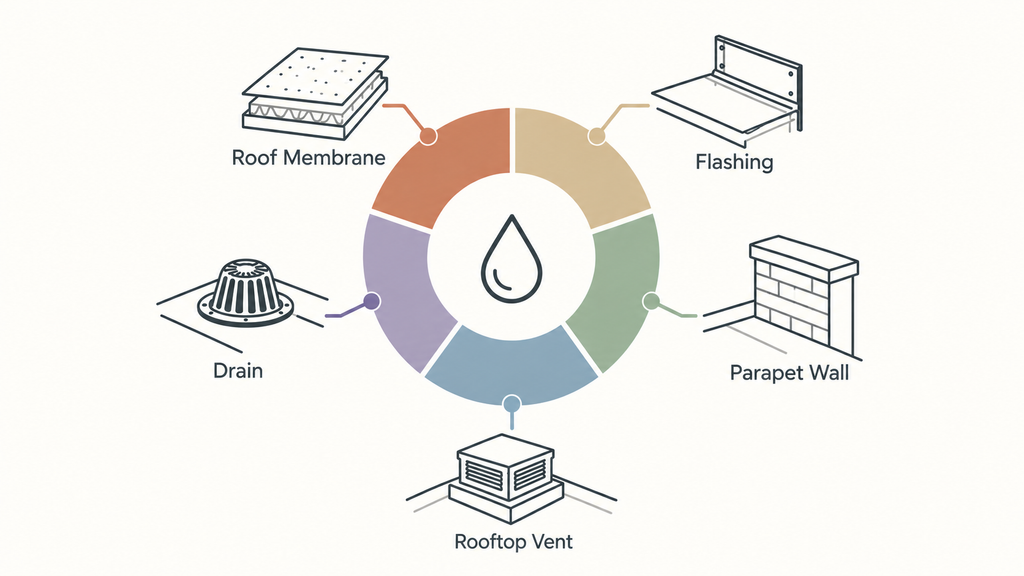
Many loft buildings have flat or low-slope roofs covered with waterproof membranes. Over time, exposure to sunlight, rain, temperature changes, and repeated repairs can cause these materials to deteriorate.
Look for cracked surfaces, loose edges, open seams, or damaged patches. These defects can allow water to reach the underlying layers.
A localized defect may only require a targeted repair. If the membrane has widespread damage, however, a larger repair or roof replacement may be necessary.
Damaged roof flashing
Flashing protects the areas where a roof meets a wall, chimney, skylight, vent, or rooftop unit. When flashing becomes loose, corroded, or separated from the surrounding materials, water can enter through these joints.
This is a common issue worth investigating when a leak appears near a wall or rooftop opening.
Professional roof flashing repair in SoHo should address the failed connection rather than simply cover the visible gap with sealant.
Problems around parapet walls
Parapet walls extend above the roofline and are common on many urban buildings. Water can enter through deteriorated flashing, damaged coping joints, or cracks in the surrounding masonry.
A leak near the top of an interior wall may therefore involve the roof-to-wall connection rather than the main roof surface.
Roofing and masonry conditions should be assessed together when evidence points to both.
2. Why Does My Roof Leak Only When It Rains Heavily?
If your roof appears fine during light rain but leaks during a downpour, the roofing system may have a defect that allows water to enter when more water reaches the surface.
Possible causes include:
- Open membrane seams or small punctures.
- Flashing that no longer seals properly.
- Water collecting in low areas of the roof.
- Vulnerable connections around vents, skylights, or rooftop equipment.
- Deteriorated roof edges or parapet details.
Heavy rain can expose problems that were not noticeable during dry weather. Wind can also push rain toward joints that receive less water under normal conditions.
A roof leak after heavy rain in Manhattan should be investigated before the next storm. If water keeps entering the same area, repeated interior patching will not solve the underlying roofing problem.
3. Flat Roof Leaks in SoHo: What Should Building Owners Check?
Flat and low-slope roofs are common on commercial buildings and converted loft properties. Although these roofs are not perfectly level, they need a suitable design that allows water to move toward the intended drainage points.
When a flat roof leak in SoHo, NYC occurs, a contractor should examine several areas.
Roof membrane and seams: Cracks, punctures, open joints, or failed patches can create entry points for water.
Roof edges and wall connections: Damaged flashing can allow water to travel beneath the membrane.
Rooftop equipment: Pipes, vents, skylights, and equipment supports create openings that need proper waterproof detailing.
Low areas where water collects: Persistent ponding may indicate uneven surfaces, settlement, or a drainage problem. Installing a new membrane without addressing the underlying cause may not provide a lasting solution.
A proper inspection should consider the entire roof assembly rather than focus only on the location where water becomes visible indoors.
For larger buildings, owners can also explore Bobby Contracts’ commercial flat roofing services to learn about flat roofing systems and related work.
4. How Can You Tell Where a Roof Leak Is Coming From?
Finding the source of a roof leak can be difficult because water does not always travel straight down. It may move beneath the membrane, along a roof deck, or behind a wall before appearing on a ceiling.
For example, a stain near a loft window might be related to roof flashing or the window’s exterior connection. A damp patch near a chimney could indicate a problem with the flashing, masonry, or nearby roofing material.
A professional roof inspection may include:
- Checking visible roofing materials for cracks, punctures, and loose seams.
- Examining flashing around roof edges, walls, and rooftop openings.
- Looking for signs of water entry and previous repairs.
- Assessing areas where moisture may have affected underlying materials.
- Recommending targeted testing when the source remains unclear.
Avoid assuming that the visible stain marks the exact location of the defect. Identifying the entry point is essential for choosing the correct repair.
5. Roof Leak Repair Options for SoHo Properties
The best repair method depends on the roofing material and the extent of the damage.
Localized membrane repair
If the roof membrane is generally sound and the damage is limited to a small area, a compatible patch or repair may be enough. The affected surface must be prepared properly, and the repair material must suit the existing system.
Flashing replacement or repair
When water enters through a failed roof-to-wall connection, the contractor may need to repair or replace the flashing and restore the waterproof seal.
Applying more sealant over deteriorated materials may provide only temporary relief.
Parapet and masonry repairs
If cracks, damaged joints, or defective coping contribute to the leak, masonry repairs may be needed alongside roofing work. The scope should address the source of water entry rather than treat the roof and wall as unrelated components.
Roof replacement
Replacement may be worth considering when the membrane is deteriorating across large areas, leaks keep returning, or inspection reveals substantial damage beneath the roofing system.
The decision should be based on the roof’s condition, the cost and expected value of repairs, and the performance of the existing system—not simply the presence of one leak.
6. When Should You Call an Emergency Roofer in SoHo?
Some leaks can wait for a scheduled inspection, but active water entry or signs of serious damage require prompt attention.
Contact a roofing professional when:
- Water is actively entering the building.
- Roofing materials or flashing appear loose after heavy winds.
- A ceiling is sagging or bulging due to water.
- Several rooms show signs of water intrusion.
- A leak is affecting a commercial space or building operations.
If water is near electrical fixtures, avoid the affected area and seek qualified assistance. Never climb onto a wet roof to investigate the damage yourself.
When contacting an emergency roof repair service in SoHo, NYC, describe where the leak appears, when it started, and whether water is still entering. Photographs taken from a safe location can also help explain the problem.
7. How to Prevent Roof Leaks in Older SoHo Buildings
Regular maintenance can help identify small defects before they develop into more extensive water damage.
Property owners should arrange periodic inspections, particularly after significant storms or when the roof has a history of leaks. Inspections should include the membrane, flashing, roof edges, parapet connections, and visible signs of deterioration.
Keep records of previous repairs and ask contractors to document any recurring issues. If the same leak returns, the inspection should reassess the original diagnosis rather than automatically repeat the same patch.
For older or historic buildings, check whether proposed exterior work requires approval from the NYC Landmarks Preservation Commission. Its permit guidance explains the requirements that may apply to designated properties.
You can find more roofing and building-maintenance advice in the Bobby Contracts blog.
Get Help With Roof Leaks in SoHo, Manhattan
A roof leak should be addressed at its source. Repeatedly repairing an interior ceiling without identifying the exterior defect can leave the building exposed to further water intrusion.
Bobby Contracts Inc. provides roofing and exterior construction services. If your SoHo loft or commercial property has a leak, damaged flashing, or deteriorating roofing materials, arrange a professional assessment to determine the appropriate next step.
Visit the Bobby Contracts blog for more roofing and building-maintenance information, or contact the company to discuss your roofing needs.
Frequently Asked Questions
What is the most common cause of roof leaks in SoHo loft buildings?
Potential causes include aging roof membranes, damaged flashing, open seams, and deteriorated roof-to-wall connections. The actual cause depends on the building and should be confirmed through an inspection.
Can a flat roof leak be repaired without replacing the entire roof?
Yes. If the damage is limited and the remaining roofing system is in good condition, a localized repair may be sufficient. Widespread deterioration may require a larger repair or replacement.
Why does my loft ceiling leak when it rains but appear dry afterward?
Water may enter during rainfall and collect within the roof assembly before reaching the ceiling. The visible signs may remain after the rain stops, even if active dripping has ended.
How much does roof leak repair cost in SoHo, Manhattan?
Costs vary according to the source of the leak, roof access, materials, and the amount of damage. A small flashing repair will generally involve a different scope of work from extensive membrane replacement. Request an inspection and written estimate for an accurate price.
Should I repair or replace an older flat roof?
Repair may be appropriate when the damage is isolated and the rest of the roof remains sound. Replacement may be more practical when deterioration is widespread or previous repairs have repeatedly failed.