
If your Brooklyn basement leaks after heavy rain, the most common causes are water collecting against the foundation, poor grading or drainage, clogged or poorly directed downspouts, foundation cracks, or failed exterior waterproofing. The right solution depends on where the water is entering, so fixing the visible leak without addressing the source may only provide a temporary fix.
Why Does My Brooklyn Basement Leak After Heavy Rain?
Heavy rain puts more water into the soil around your foundation in a short period of time. If that water is not directed away from the building, it can build up against foundation walls and eventually find its way through cracks, joints, masonry, windows, or other weak points.
This is particularly important in Brooklyn, where older homes, brownstones, rowhouses, and multi-family buildings can have aging foundations, masonry, drainage systems, and waterproofing.
A recent Reddit discussion from a Brooklyn homeowner described water coming into the basement between the floor and wall specifically during heavy rain, with the homeowner unsure where the water was coming from.
That is a common pattern: the basement may stay completely dry during normal weather but leak when rainfall becomes intense.
5 Common Reasons a Brooklyn Basement Leaks After Heavy Rain
1. Poor grading around the foundation
The ground around your home should generally direct water away from the foundation.
If the soil slopes toward the building, rainwater can collect directly against the foundation wall. During a heavy storm, the amount of water can overwhelm the surrounding soil and increase pressure against the foundation.
Recent homeowner discussions about heavy-rain basement leaks repeatedly point to grading as one of the first things to investigate.
2. Gutters or downspouts are sending water toward the foundation
A leaking or overflowing gutter can put a surprisingly large amount of water next to your foundation.
Downspouts can also cause problems when they:
- Discharge directly beside the foundation
- Are clogged
- Overflow during intense rainfall
- Have damaged connections
- Do not carry water far enough away
Before assuming you need major waterproofing work, check where your roof water is going.
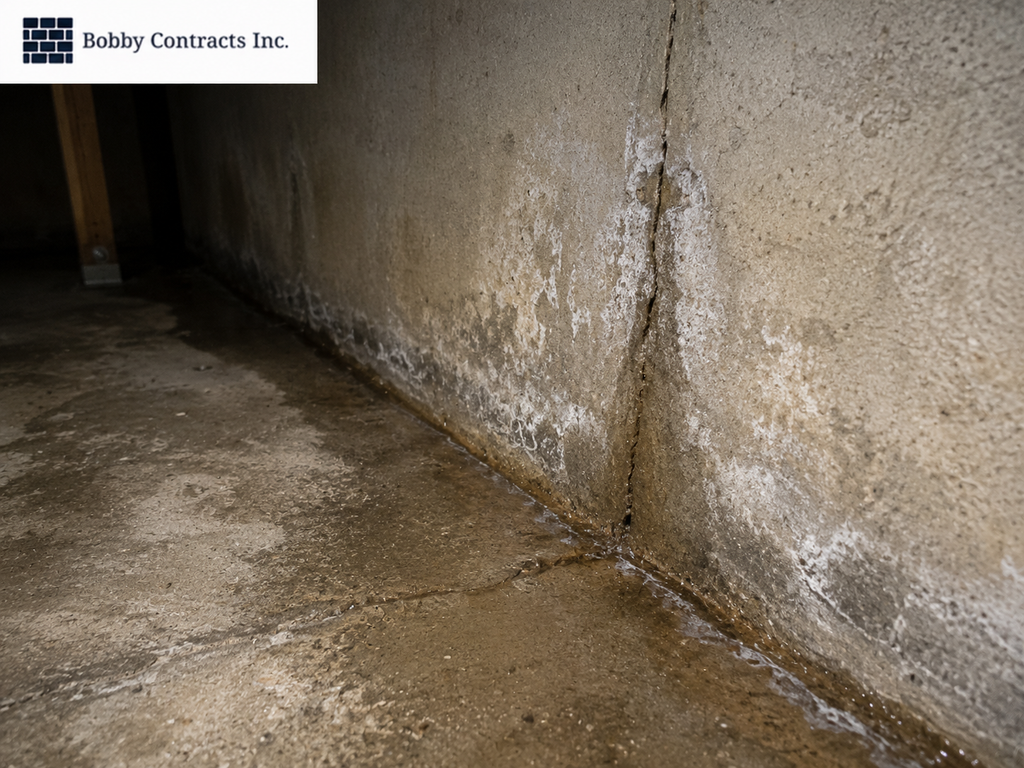
3. Cracks in the foundation or basement walls
Foundation and masonry cracks can become entry points for water.
A small crack may not leak during ordinary rainfall. But when the surrounding soil becomes saturated, water pressure against the foundation can increase and force moisture through the opening.
The visible crack is not always the entire problem, though. The surrounding drainage and exterior waterproofing should also be evaluated.
4. Failed or inadequate exterior waterproofing
Older Brooklyn properties may have deteriorated waterproofing, damaged masonry, failed sealants, or other exterior conditions that allow water to penetrate below grade.
If water is repeatedly entering through the same basement wall after heavy rain, exterior waterproofing may need to be considered rather than simply sealing the leak from inside.
Bobby Contracts provides foundation waterproofing, exterior waterproofing, basement leak repair, crack repair, drainage improvements, and water-intrusion repair in Brooklyn.
5. Water is entering through the wall-floor joint
If you notice water appearing where the basement wall meets the floor, the cause can involve groundwater, hydrostatic pressure, drainage problems, or other foundation conditions.
This is another situation where simply applying a sealant to the inside may not address the underlying source.
A recent Reddit discussion about heavy-rain basement seepage described water entering around the wall-floor area and homeowners being advised to investigate drainage, grading, gutters and downspouts.
“Why Does My Basement Only Leak During Heavy Rain?”
This is a question homeowners frequently ask.
A basement can remain completely dry during light rain because the surrounding soil can absorb or redirect the water.
During a major storm, however, the soil can become saturated quickly. Once the ground cannot absorb additional water efficiently, more water remains around the foundation and can find weak points in the structure.
That is why a basement that appears fine most of the year can suddenly develop:
- Damp walls
- Water stains
- Dripping cracks
- Wet floors
- Efflorescence
- Musty odors
- Standing water
A recent homeowner reported basement seepage only during unusually heavy storms and suspected that saturated soil and poor drainage were allowing water to reach the foundation.
Should You Waterproof the Basement From the Inside or Outside?
It depends on the source of the water.
If the problem is caused by water reaching the foundation from outside, addressing the exterior source may provide a more effective long-term solution.
Depending on the property, the appropriate solution could involve:
- Exterior waterproofing
- Foundation crack repair
- Drainage improvements
- Grading corrections
- Downspout improvements
- Masonry waterproofing
- Sealant replacement
- Interior drainage systems
There is no single waterproofing method that works for every Brooklyn basement.
The first step should be determining how and where the water is entering.
What Should You Do If Your Brooklyn Basement Leaks After Rain?
Start by checking the obvious exterior sources:
- Check whether gutters are clogged or overflowing.
- Check where downspouts discharge.
- Look for soil that slopes toward the foundation.
- Look for visible foundation or masonry cracks.
- Note exactly where water appears inside.
- Check whether the problem occurs only during heavy rain.
- Have the foundation and drainage conditions professionally inspected if the problem continues.
Avoid treating the visible water stain as the entire problem.
The goal should be to identify the path the water is taking into the basement and address the source.
Brooklyn Basement Waterproofing by Bobby Contracts
Roof Leak or Basement Water Problem?
Get a free on-site inspection and written estimate from Brooklyn’s trusted roofing & waterproofing experts.
Chat on WhatsApp for a Free InspectionBobby Contracts Inc. has 20+ years of experience working on roofing, masonry, waterproofing, and exterior restoration projects in Brooklyn and NYC. The company provides basement leak investigation, foundation waterproofing, exterior waterproofing, crack repair, drainage improvements, and water-intrusion repair.
Bobby Contracts provides basement waterproofing for Brooklyn homes, brownstones, apartment buildings, co-ops, condos, mixed-use properties, and commercial buildings.
You can learn more about their Basement Waterproofing Contractors in Brooklyn, NY and request an on-site inspection and written estimate.
Key Takeaways
- Heavy rain can overwhelm drainage and increase water pressure against your Brooklyn foundation.
- Poor grading, gutters, downspouts and foundation cracks are common causes of basement leaks.
- A recurring basement leak should be diagnosed at its source rather than simply sealed from the inside.
- Exterior waterproofing, drainage improvements or foundation repairs may be necessary depending on the cause.
- An on-site inspection can determine whether you need a simple repair or a more comprehensive waterproofing solution.
Frequently Asked Questions
Why does my Brooklyn basement leak only after heavy rain?
Heavy rain can saturate the soil around your foundation and increase water pressure against basement walls. Poor grading, drainage problems, foundation cracks, and failed waterproofing can allow that water to enter.
Is a basement leak always caused by a foundation crack?
No. Water can enter because of poor grading, gutters, downspouts, drainage problems, deteriorated masonry, failed waterproofing, windows, wall-floor joints, or foundation cracks.
Can gutters cause basement leaks?
Yes. Overflowing gutters or downspouts that discharge too close to the foundation can direct large amounts of rainwater toward the building.
Should I seal a basement leak from the inside?
An interior patch may reduce visible water temporarily, but it may not solve the underlying exterior water problem. The correct approach depends on the source and path of the water.
When should I call a basement waterproofing contractor?
If water repeatedly enters your basement after rain, especially if you notice cracks, damp walls, efflorescence, standing water, or recurring leaks, a professional inspection can help identify the underlying cause before the problem becomes more extensive.